
The short answer
Prof. Dr. Sherbat Khan Mandokhail is a senior gastroenterologist with a long focus on liver disease. For nearly two decades he was the provincial focal person for Balochistan's hepatitis programme, and he sits on the executive council of the Pakistan Society for the Study of Liver Diseases. At his centre on Zarghun Road, liver and hepatitis tests and abdominal ultrasound are done on-site, and endoscopic treatment for liver complications, such as variceal banding, is available.
Liver problems seen at the centre
- Hepatitis B and C (kala yarqan) — often silent for years and found only on a blood test.
- Fatty liver — very common, usually found on ultrasound, and often reversible with gradual weight loss.
- Jaundice — yellow eyes and dark urine, from liver inflammation or a blocked bile duct.
- Cirrhosis and fluid in the belly (ascites) — long-term scarring that needs regular follow-up.
- Swollen veins in the food pipe (varices) — treated with banding to prevent dangerous bleeding.
- Raised liver enzymes found on a routine blood test.
Your first visit
Bring every previous report — blood tests, hepatitis results, ultrasound and endoscopy reports — and a list of all your medicines, including herbal remedies. The doctor will examine you, review the reports, and usually arrange liver function tests, hepatitis tests and an abdominal ultrasound in the same building, so most of the work-up can happen in one visit.
Treatment and follow-up
- Hepatitis C: prescribed oral medicines for about three months cure most patients, and cure is confirmed with a follow-up test.
- Hepatitis B: usually controlled long-term with tablets and regular monitoring; family members are tested and vaccinated.
- Fatty liver: a practical weight, diet and activity plan, with checks of blood sugar and cholesterol.
- Cirrhosis: treatment of the cause, salt and fluid advice for ascites, endoscopy to check for varices, and regular ultrasound surveillance.
Why see a gastroenterologist for liver disease?
In Pakistan, liver disease is mostly treated by gastroenterologists, who are trained in both the liver and the digestive tract — and in the endoscopic procedures liver patients often need. A specialist who focuses only on the liver is called a hepatologist. Prof. Dr. Sherbat Khan holds FCPS in Medicine and in Gastroenterology and served as Professor and Head of Gastroenterology at Bolan Medical Complex Hospital, Quetta.
Warning signs: do not delay
- Vomiting blood, or black, tar-like stools.
- Confusion or unusual drowsiness in someone with liver disease.
- Yellow eyes with high fever and shivering.
- A rapidly swelling belly with fever or pain.
- In any of these, go to the nearest hospital emergency straight away.
If there is vomiting of blood, black stools, severe pain, fainting or confusion, do not wait for clinic hours — go to the nearest hospital emergency.
How it is diagnosed and treated at the centre
- Liver function and hepatitis tests in the centre's own laboratory.
- Abdominal ultrasound on-site, in the same visit.
- Endoscopy to check for food-pipe varices, with banding when needed.
- Long-term follow-up plans for hepatitis B and C, fatty liver and cirrhosis.
What you can do
- Do not take herbal or 'liver tonic' remedies without asking your doctor; some damage the liver.
- Avoid painkillers such as NSAIDs unless your doctor approves them.
- Keep every follow-up appointment, even when you feel well.
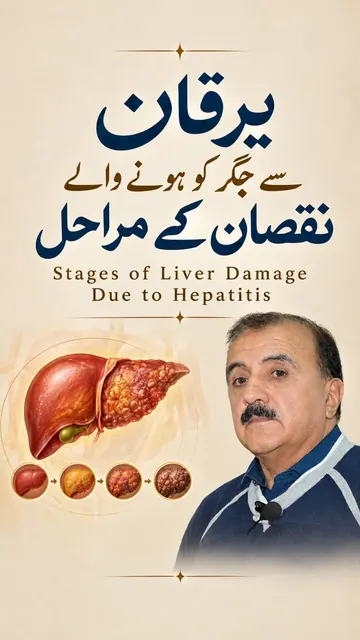 Video by the doctor on this topicیرقان سے جگر کو ہونے والے نقصان کے مراحلWatch on YouTube
Frequently asked questions
Is there a liver specialist in Quetta who treats hepatitis C?
Can hepatitis C be cured?
Do I need a referral?
What are the clinic hours?
This information is for general awareness and does not replace an examination. Do not start or stop any medicine without your doctor’s advice.